


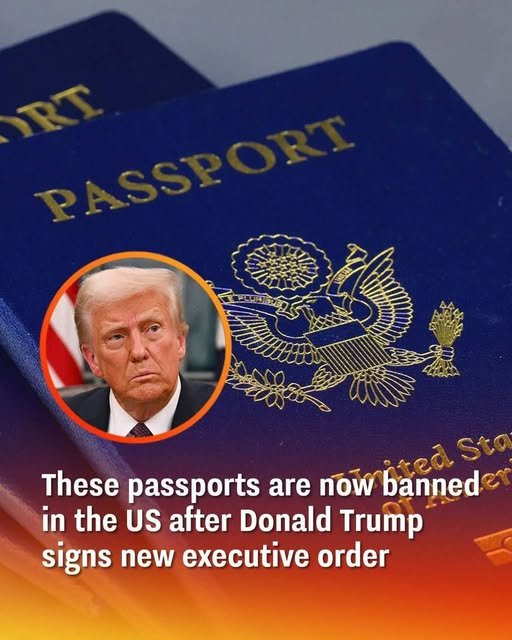
On January 20, 2025, former President Donald Trump, following his re-election, signed Executive Order 14168, a decision that has sparked significant national debate. This new federal policy effectively bans the issuance of passports that carry the nonbinary gender marker “X” — a designation previously available under the Biden administration.
The move has raised alarms among LGBTQ+ advocacy groups, human rights organizations, and civil rights attorneys across the United States. It has also ignited a broader conversation around gender identity, government documentation, and personal freedoms.
What Does Trump’s Executive Order Say?
The executive order mandates that all federal government-issued identification documents must now reflect the binary sex assigned at birth, recognizing only two gender markers: “male” or “female.” This affects several forms of identification, including:
- U.S. Passports
- Global Entry Cards
- Visas
- Social Security Records
- Federal Employment Files
The Biden administration introduced the “X” gender option in 2021 to accommodate Americans who identify as nonbinary, intersex, or gender non-conforming. Trump’s executive order directly reverses this progress, drawing strong reactions from both supporters and opponents of the policy.
What Happens to Existing “X” Gender Marker Passports?
Individuals who currently hold a passport with an “X” gender marker can still use it until it expires. However, when renewing their passport, they will be required to select either “male” or “female” as their gender marker — a mandate that many see as an infringement on personal rights.
The U.S. State Department, under Secretary Marco Rubio, has also instructed passport offices to suspend any applications requesting the “X” gender marker, and to deny changes to the gender field that do not comply with the new binary standard.
Public Response and Legal Backlash
Civil liberties groups, including the American Civil Liberties Union (ACLU) and Lambda Legal, have already launched lawsuits challenging the constitutionality of the executive order. Advocates argue that the policy violates:
- The First Amendment (freedom of expression)
- The Fourteenth Amendment (equal protection under the law)
- Federal anti-discrimination protections
“This order forces individuals to misrepresent their identity on official documents,” said an ACLU spokesperson. “It is not only dehumanizing, but also legally and ethically indefensible.”
A prominent transgender influencer and activist has also filed a legal complaint, claiming that the policy discriminates against nonbinary Americans and puts them at increased risk when traveling abroad.
Global Implications of Gender Marker Policies
The United States is not the only country to confront this issue. Several other nations — including Canada, Germany, Australia, and Nepal — already offer nonbinary gender markers on passports and national ID cards. These options help ensure that citizens can travel safely and without unnecessary scrutiny.
By reversing its policy, the U.S. joins a small but controversial group of countries that do not recognize gender identities beyond the traditional binary. Critics argue this places nonbinary U.S. citizens at a greater risk of harassment, detainment, or even violence when traveling internationally.
Supporters of the Executive Order: “Restoring Biological Reality”
Despite widespread backlash, the executive order has support among many conservative lawmakers and religious organizations. They argue that government documentation should reflect objective, biological facts, not self-perceived identities.
“The federal government should not participate in the denial of biological reality,” said a spokesperson for a conservative policy think tank. “This executive order restores clarity and consistency to vital records.”
Some also argue that allowing nonbinary designations opens the door to identity fraud or abuse of immigration systems, though there is no substantial evidence to support these claims.
Political and Social Ramifications
The executive order comes at a time when debates around gender identity and trans rights are reaching a fever pitch across the country. With more than 20 states already implementing laws that restrict gender-affirming care, ban trans participation in sports, or limit bathroom access, Trump’s order adds fuel to an already heated cultural fire.
From a political perspective, this move may help solidify support among Trump’s conservative base, but it risks alienating younger, more progressive voters — especially Generation Z and Millennials who overwhelmingly support LGBTQ+ rights.
What Does This Mean for Nonbinary Americans?
For many nonbinary individuals, this executive order is not just an administrative inconvenience — it’s a deeply personal and painful erasure of their identity.
Without the ability to obtain federal identification that reflects their gender identity, many nonbinary people face:
- Increased risk of discrimination in employment, housing, and healthcare
- Greater difficulty in international travel, including potential detainment at borders
- Psychological distress and alienation due to forced misidentification
Mental health professionals warn that such policies can have long-lasting emotional and psychological consequences for those affected.
What’s Next? The Fight Moves to the Courts
As legal battles begin to unfold, many are watching closely to see how the judiciary interprets the constitutional implications of the executive order. Some legal experts predict that the case could ultimately reach the Supreme Court, where it could set a major precedent for gender recognition laws in the U.S.
In the meantime, activists are urging individuals to contact their lawmakers, donate to LGBTQ+ legal defense funds, and support organizations working on gender equity.
Final Thoughts
Donald Trump’s new gender executive order has instantly become one of the most divisive political moves of 2025. While the order may be legally binding for now, its long-term fate will be decided in courtrooms — and perhaps at the ballot box in future elections.
For nonbinary and transgender Americans, the battle for recognition and equality is far from over. As the legal and political landscape continues to shift, so too does the future of identity in the United States.