




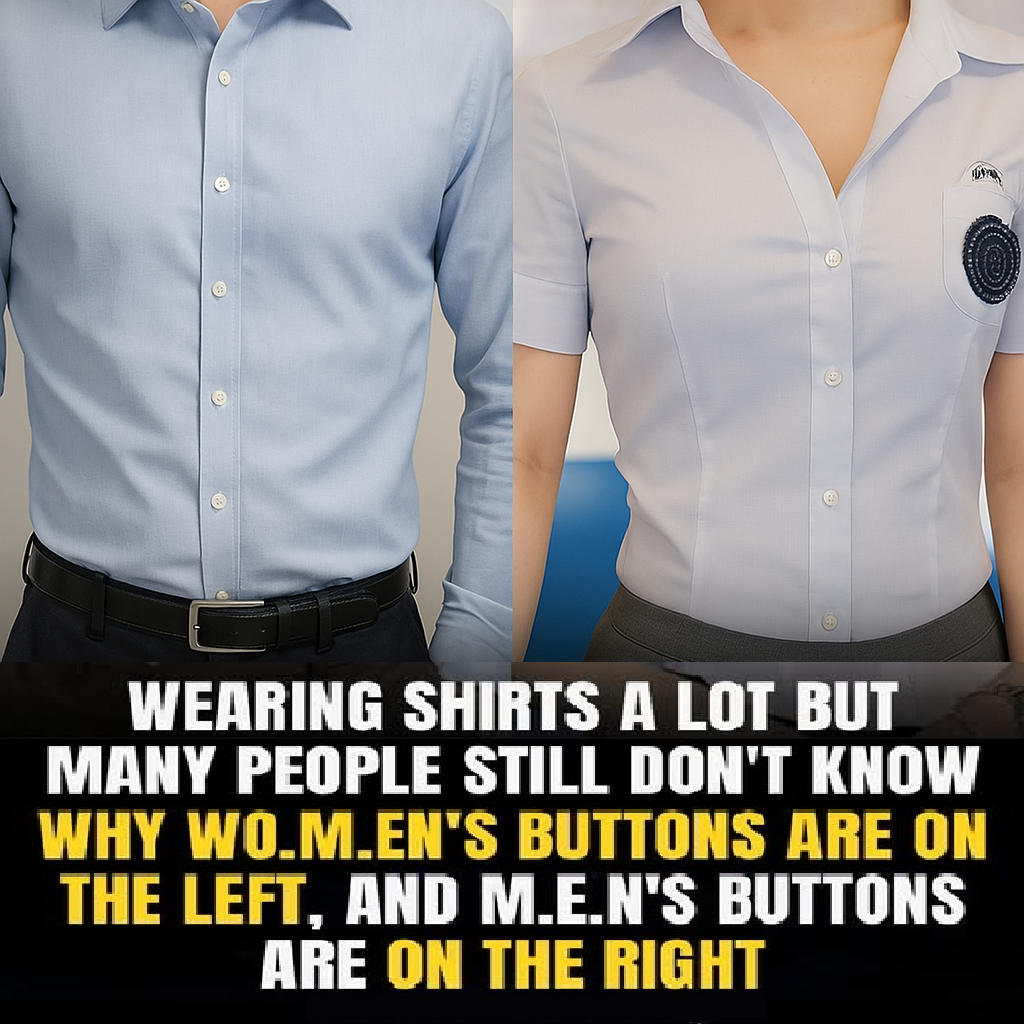
If you wear button-up shirts regularly, you’ve likely noticed something curious: men’s shirts have buttons on the right, while women’s shirts have buttons on the left. At first glance, it might seem like a random design choice, but this small detail actually has deep historical roots and practical reasons that date back hundreds of years.
In today’s fashion-forward world, these traditions are often followed without question, yet few people actually know the real reason behind the button placement. So, if you’ve ever wondered why shirts are designed differently for men and women, you’re not alone. Let’s dive into the fascinating history, logic, and cultural significance of this unique fashion feature.
The Quick Answer: It’s About History, Class, and Convenience
The difference in button placement between men’s and women’s clothing originated in the 19th century and has to do with how people used to dress, who dressed them, and even which hand people used for defense or child care.
But to understand why this tradition started — and why it still exists today — we need to go back in time.
1. Men Dressed Themselves — So Buttons Went on the Right
Historically, men usually dressed themselves. Since the majority of people are right-handed, having buttons on the right side made it easier and faster for men to dress.
Think about it: if you’re right-handed, it’s more natural to button your shirt from right to left. That’s exactly why tailors began placing buttons on the right side for men’s clothing — it was the most practical and ergonomic option.
2. Wealthy Women Had Help Getting Dressed
In contrast, during the same era — particularly among the European upper class — women didn’t usually dress themselves. Ladies of high status often had maids or servants to help them with complicated gowns and layers of undergarments.
For a right-handed maid dressing someone facing them, it was easier to button garments if the buttons were on the left side of the woman’s garment. This allowed smoother dressing from the maid’s perspective.
So, the placement wasn’t about the wearer’s convenience, but the dresser’s convenience.
3. The Baby Theory: Holding Infants on the Left Arm
Another theory — although not as widely accepted — is rooted in maternal practicality.
Most women naturally carry babies on their left arm (keeping their dominant right hand free). With the buttons on the left side, some speculate that it made it easier for mothers to unbutton shirts with one hand while holding a child.
Though not a primary reason for the original button placement, it’s a practical observation that helped reinforce the tradition.
4. Weaponry and Armor: Men Needed Fast Access
In historical Europe, clothing design was also influenced by combat readiness. For men who carried weapons like swords, buttoning from the right ensured their clothing wouldn’t interfere with drawing a weapon quickly with the dominant hand.
Imagine a man reaching across his body to draw a sword from his left hip — clothing that overlaps left to right (as men’s shirts do) wouldn’t get in the way. This reinforced the placement of right-side buttons on men’s shirts and coats.
5. Fashion Traditions That Stuck
While the original reasons behind gendered button placement are now obsolete — most people dress themselves, and sword-carrying is no longer a thing — the tradition stuck.
Fashion is heavily influenced by history, and many modern design conventions are simply inherited from past eras. Even today, major fashion brands and designers continue to honor this centuries-old norm, especially in formal wear and uniforms.
6. Differentiation and Gender Norms in Fashion
The difference in button placement has also become a subtle way to distinguish between men’s and women’s clothing. In a fashion industry that often emphasizes gender-based styles, this small design detail plays a role in reinforcing visual and practical gender norms.
Even though unisex clothing is growing in popularity, button placement still signals to buyers which gender a piece of clothing is intended for.
7. Exceptions in Modern Fashion
Of course, not all clothing follows this rule. Many unisex brands and casual fashion lines have adopted a more neutral approach. In these cases, you might find buttons on either side — or even designs that do away with buttons altogether.
Some designers intentionally reverse traditional placements as a statement on gender fluidity and breaking fashion norms.
SEO Focus: Why This Matters Today
With more consumers searching for fashion facts, design logic, and clothing hacks, articles like this provide a valuable answer to a popular Google query. This makes it great for AdSense monetization and SEO, especially with the following related keywords:
- Why are women’s buttons on the left?
- Why are men’s buttons on the right?
- Shirt button placement history
- Fashion design traditions
- Button-up shirt differences
- Gender-specific clothing designs
- Fun fashion facts
- Shirt button orientation meaning
These keywords target high-volume search interest and can boost your site’s visibility in fashion, history, and lifestyle niches.
Final Thoughts: A Small Detail with a Big Story
It might seem like a tiny detail, but the placement of buttons on men’s and women’s shirts tells a rich story about history, culture, social class, and even technology. From 19th-century dressing rooms to modern fashion runways, this design feature has stood the test of time.
So, the next time you put on a shirt, take a closer look — you’re literally wearing a piece of fashion history.
FAQs About Shirt Button Placement
Q: Is it true that all women’s shirts have buttons on the left?
A: While traditionally this is true, many modern brands — especially in casual wear — may not follow this rule strictly.
Q: Do left-handed people get any advantage from reversed buttons?
A: Interestingly, left-handed people may find women’s shirt buttons easier to use, but button placement wasn’t originally designed for left-handed individuals.
Q: Are there brands that make unise*x shirts with centered buttons?
A: Yes! Several modern and gender-neutral clothing brands offer shirts with centered plackets or symmetrical buttoning, especially in streetwear and minimalist fashion lines.