


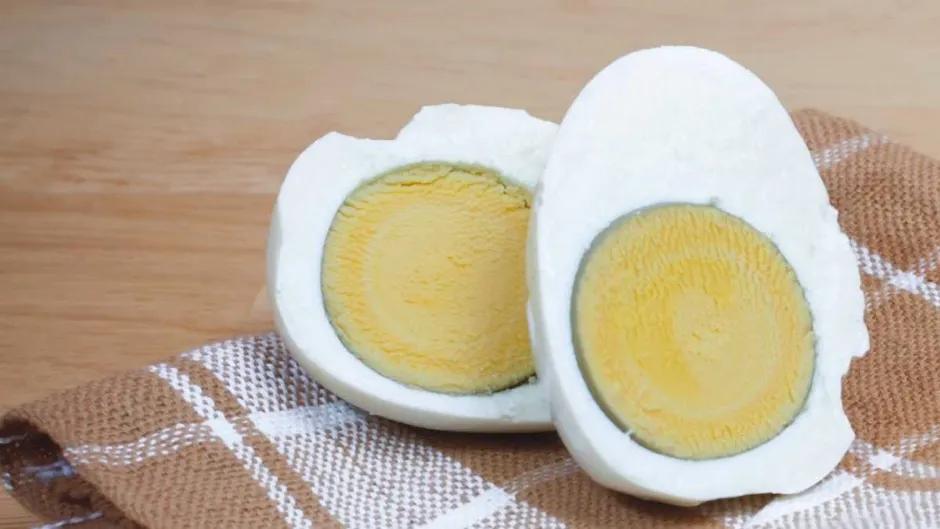
Have you ever peeled a hard-boiled egg and noticed a strange greenish-gray ring surrounding the yolk? If so, you may have wondered whether something went wrong during cooking or whether the egg is still safe to eat.
The good news is that the green ring is usually nothing to worry about. According to the U.S. Department of Agriculture, the discoloration occurs because sulfur compounds from the egg white react with iron compounds near the surface of the yolk. This reaction is commonly associated with overcooking and does not make the egg unsafe to eat.
Although the color may look unusual, it is actually a simple example of food chemistry happening right in your kitchen. Understanding why it happens can also help you prepare hard-boiled eggs with a brighter yellow yolk and a better texture.
What Causes the Green Ring?
The green ring develops because of a chemical reaction involving two naturally occurring components of an egg: sulfur and iron.
Egg whites contain sulfur-containing proteins, while egg yolks naturally contain iron. When an egg is exposed to heat for an extended period, sulfur compounds from the white can react with iron near the surface of the yolk. The resulting compound produces the characteristic greenish-gray color.
The U.S. Department of Agriculture explains that the reaction occurs on the yolk’s surface and is commonly associated with overcooking. A high amount of iron in the cooking water can also contribute to the discoloration.
So, if you see a thin green or gray ring around an otherwise normally cooked yolk, it does not necessarily mean the egg has gone bad.
Why Does Overcooking Make It More Noticeable?
Heat is the key factor behind the reaction.
As an egg cooks, heat changes the structure of proteins in the egg white and yolk. Cooking for too long or at an excessively high temperature encourages more of the sulfur compounds in the white to participate in the reaction with iron near the yolk.
The longer the egg remains exposed to heat, the more noticeable the discoloration can become. This is one reason an egg that has been aggressively boiled for a long time may have a more pronounced green ring than an egg cooked gently for the appropriate amount of time.
Overcooking can also affect texture. The white may become firmer or rubbery, while the yolk can become dry and crumbly. Avoiding excessive cooking can therefore improve both appearance and eating quality.
Is a Green Ring Around the Yolk Safe to Eat?
Yes. A green ring caused by the sulfur-and-iron reaction is considered safe to eat.
The USDA specifically states that the green color is safe to consume. The discoloration itself does not indicate that the egg has spoiled.
However, it is important to distinguish harmless cooking discoloration from actual signs of spoilage. Unusual colors or odors elsewhere in an egg can have different causes. For example, the USDA notes that pink or iridescent egg whites can indicate spoilage associated with certain bacteria.
In other words, a green ring around a properly cooked yolk is not the same thing as an egg showing other unusual signs of spoilage.
Does the Green Ring Mean the Egg Is Old?
Not necessarily.
Many people assume that a green ring means an egg has been sitting around for too long, but the primary cause is the cooking process. Overcooking can encourage the sulfur and iron reaction that produces the discoloration.
The condition of the egg before cooking can influence how it behaves, but seeing a green ring by itself is not a reliable way to determine whether an egg was fresh or old.
Instead of judging an egg’s freshness solely by the color of the cooked yolk, pay attention to proper storage, handling, cooking, and refrigeration.
Does the Green Ring Change the Nutrition?
The green ring itself does not make the egg nutritionally harmful.
The egg still provides protein and other nutrients found naturally in eggs. The green color is simply the visible result of a chemical reaction occurring during cooking. The USDA notes that the green discoloration is safe to consume.
That said, an extremely overcooked egg may have an undesirable texture and flavor. The goal when preparing hard-boiled eggs is therefore not simply to avoid the green ring but to cook the eggs properly for a pleasant texture and appearance.
How Can You Prevent the Green Ring?
If you prefer your hard-boiled eggs to have bright yellow yolks without a greenish edge, controlling the cooking process can help.
Avoid cooking the eggs for much longer than necessary. Once they are properly cooked, cool them quickly rather than allowing them to remain in the hot water.
The University of Nebraska-Lincoln recommends rapidly cooling cooked eggs by running cold water over them or placing them in ice water. Quick cooling helps stop the cooking process and can reduce the likelihood of the green ring developing.
The exact cooking method can vary depending on egg size, starting temperature, altitude, cookware, and personal preference, so the important principle is to avoid prolonged, aggressive cooking.
Why Does the Ring Usually Appear Around the Yolk?
The location of the discoloration makes sense when you understand the chemistry.
The egg white surrounds the yolk, so the sulfur-containing compounds are naturally located around it. The yolk contains iron. During cooking, these components can interact near the boundary between the white and the yolk.
As a result, the reaction tends to produce a visible ring exactly where the two parts of the egg meet.
This is why the entire yolk usually does not turn green. Instead, you see a narrow greenish-gray area around its outside edge.
Does Cooking Water Affect the Color?
Cooking water can sometimes play a role as well.
According to the USDA, a high amount of iron in the cooking water can contribute to the green discoloration.
For most home cooks, however, overcooking is the more familiar explanation. If you consistently notice unusually strong discoloration despite using an appropriate cooking method, the water itself may be one factor worth considering.
How to Properly Store Hard-Boiled Eggs
Cooking the egg properly is only part of food safety. Storage also matters.
The FDA recommends refrigerating eggs promptly and keeping the refrigerator at 40°F or below. Hard-cooked eggs should be eaten within one week after cooking, whether they are still in their shells or have been peeled.
Keeping cooked eggs refrigerated helps reduce the risk of bacterial growth. It is also a good idea to store them in a clean, covered container and avoid leaving them at room temperature for extended periods.
These food-safety practices are more important than whether a yolk happens to have a green ring.
How Is a Green Ring Different From Spoilage?
This is an important distinction.
A green ring around the yolk of an otherwise properly cooked egg is a known cooking reaction and is considered safe.
But other unusual changes can signal that an egg should not be eaten. The USDA notes that certain pink or iridescent changes in the egg white can be associated with spoilage.
If an egg has an unusual odor, questionable storage history, a cracked shell before cooking, or other obvious signs of spoilage, it is better not to rely on the green-ring explanation alone.
When in doubt about food safety, it is safer to discard the questionable egg.
Why Cooling Eggs Quickly Helps
Quick cooling does more than make eggs easier to handle.
When a freshly cooked egg is placed in cold or ice water, the temperature drops quickly and the cooking process slows. This can help prevent the egg from continuing to cook from residual heat.
The University of Nebraska-Lincoln specifically recommends cooling hard-cooked eggs rapidly after cooking to help avoid the green ring.
Rapid cooling can also help produce a more pleasant yolk texture and make peeling easier once the egg has cooled.
Hard-Boiled Eggs Are a Great Example of Food Chemistry
The green ring may initially look like a cooking mistake, but it is actually a fascinating example of chemistry in everyday life.
Cooking changes proteins, releases and moves compounds, and creates new chemical interactions. In this case, sulfur from the egg white and iron from the yolk interact during heating and produce a greenish compound at the boundary between the two parts.
It is a reminder that many of the changes we see in food are the result of chemistry rather than spoilage or contamination.
Final Thoughts
The green ring around a hard-boiled egg yolk may look unusual, but it is generally harmless. It forms when sulfur compounds from the egg white react with iron compounds near the yolk, with overcooking being a common reason the reaction becomes visible. The USDA confirms that this green discoloration is safe to consume.
If you prefer bright yellow yolks, the easiest approach is to avoid excessive cooking and cool the eggs quickly after they are done. Proper refrigeration is also essential, with the FDA recommending that hard-cooked eggs be used within one week when properly refrigerated.
So the next time you cut open a hard-boiled egg and discover a green ring, there is usually no reason to panic. Instead, you are seeing a simple chemical reaction that occurs when two naturally occurring components of the egg meet under the right cooking conditions.