

The private thoughts of Pope Francis are receiving renewed attention following the publication of excerpts from a personal diary that offers a rare glimpse into his spiritual life. The writings reveal moments of deep reflection, personal struggles, emotional uncertainty, and experiences that the late pontiff interpreted as encounters with the devil.
The revelations appear in a new book titled The Private Diary of Pope Francis, which draws on personal notes written between 1992 and August 2024. The diary provides a different perspective on the former leader of the Catholic Church, showing that behind his public responsibilities and familiar appearance, he experienced periods of spiritual difficulty and intense self-examination.
One of the most striking parts of the published material concerns three occasions when Francis believed he had encountered the devil. He also described an experience in which he felt he had seen the entrance to hell. These personal reflections have attracted international attention because they reveal thoughts that were not widely known during his lifetime.
A Private Diary Reveals a Different Side of Pope Francis
Pope Francis, born Jorge Mario Bergoglio in Argentina, became head of the Catholic Church in March 2013. During his papacy, he became widely recognized for his emphasis on compassion, humility, social responsibility, and concern for people facing difficult circumstances.
Although his public life was closely followed, many details of his private spiritual journey remained unknown. His diary now offers readers an opportunity to understand some of the thoughts and experiences he recorded away from public attention.
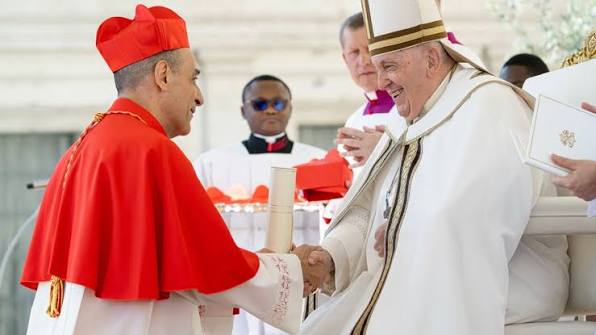
The book was curated by Cardinal Víctor Manuel Fernández, a longtime associate of Francis and head of the Vatican’s Dicastery for the Doctrine of the Faith. According to reports, Francis had entrusted him with the writings and wanted their spiritual reflections to become known.
The published collection does not reproduce every private entry. Some passages were selected and presented with explanations, while certain highly confidential thoughts were written in a personal code that has not been included.
This means the book is not a complete account of everything Francis recorded. Nevertheless, the available material provides meaningful insight into the spiritual questions that occupied his mind over several decades.
Three Experiences Francis Interpreted as Encounters With the Devil
Among the most widely discussed passages are Francis’s descriptions of three experiences that he believed involved the devil. He recorded these reflections in an entry dated January 24, 2021.
According to the published excerpts, the first two experiences occurred while he was serving as a church leader in Buenos Aires, Argentina. He recalled seeing a mysterious presence from a car window and another experience during a religious service in a chapel.
Francis described the appearance as something he found difficult to forget. In his writing, he referred to an unsettling gaze and a powerful impression that remained with him long after the experiences.
The third incident, according to his diary, occurred in Rome following his 2018 visit to Chile. He recalled being in a meeting when he believed he saw and heard the same presence again.
Francis interpreted these experiences through his religious beliefs and described them as moments of spiritual confrontation. His account reflects his personal understanding of what happened rather than an independently established explanation of the events.
The descriptions have attracted attention because they reveal how seriously he considered the spiritual challenges he faced. They also show that even a person holding one of the world’s most influential religious positions could experience uncertainty, fear, and the need for personal reflection.
The Night He Wrote About Seeing the Entrance to Hell
Another remarkable passage concerns an experience Francis recorded in June 2018. While preparing to go to sleep, he wrote that he had seen what he described as the entrance to hell.
The diary entry suggests that the experience frightened him. He recalled watching the scene briefly before becoming concerned about what he was witnessing. He then reached for his rosary and turned to prayer.
For Francis, the rosary represented a source of comfort and spiritual protection. His response reflected the importance of prayer in his personal life, particularly during moments when he felt overwhelmed or uncertain.
The account is especially interesting because it connects his private spiritual reflections with the traditions and beliefs of the Catholic Church. Religious symbolism, prayer, and the struggle between good and evil have long been important themes in Christian teaching.
However, it is important to understand the distinction between a personal religious experience and an independently verified event. The diary records what Francis believed he experienced and how he interpreted it. Readers may understand those reflections through their own religious or philosophical perspectives.
The Chile Visit and a Difficult Period in His Papacy
The diary also provides important context surrounding Francis’s 2018 visit to Chile. The trip became a difficult moment in his papacy because of a major controversy involving allegations of misconduct within the country’s Catholic Church.
During the visit, Francis faced criticism after defending a bishop who had been accused of mishandling concerns involving a priest. His public comments created considerable disappointment among people who believed the concerns had not received sufficient attention.
After returning to Rome, Francis reviewed the situation and acknowledged that he had been misinformed. He later apologized and took steps to address the concerns, including arranging an investigation and meeting with Chilean church leaders.
His diary reveals that the experience affected him deeply. He wrote about the difficulty of accepting how serious the situation had become and expressed distress over the way events had unfolded.
The published reflections suggest that the Chile controversy became more than a public relations challenge. It raised difficult questions for Francis about responsibility, judgment, leadership, and the consequences of decisions made by people in positions of authority.
His reference to seeing the entrance to hell was connected in his writings to the emotional and spiritual weight of this period.
A Two-Year Spiritual Crisis Between 2021 and 2022
Beyond the unusual experiences described in the diary, another important revelation concerns a spiritual crisis Francis experienced between 2021 and 2022.
The writings indicate that he struggled with questions about leadership, authority, and the temptation to believe that he alone could solve every problem facing the Catholic Church.
Leading an institution with millions of members across different countries involves complicated responsibilities. Decisions can affect religious communities, church officials, social programs, and international relationships. The diary suggests that Francis sometimes felt the weight of these responsibilities intensely.
He reflected on the danger of using authority in the wrong way and expressed concern about treating other people as though they were simply instruments for achieving his own objectives.
The crisis was also accompanied by health difficulties, exhaustion, and pressure surrounding important decisions. These circumstances appear to have contributed to a period of emotional and spiritual uncertainty.
According to Cardinal Fernández’s explanation, Francis eventually moved beyond this difficult period by placing greater trust in God’s mercy.
The experience appears to have influenced his later spiritual teaching. Rather than presenting himself as someone who had all the answers, his reflections emphasized humility, dependence on faith, and the importance of recognizing personal limitations.
Francis Was Often Critical of His Own Behavior
The diary does not focus exclusively on unusual spiritual experiences. It also reveals a person who regularly examined his own behavior and acknowledged personal weaknesses.
In several entries, Francis reflected on emotions such as pride, envy, irritation, and impatience. He also recalled ordinary moments when he believed he had not acted with the kindness or understanding expected of him.
One reflection concerned an encounter with a man on the street. Francis remembered that he had wanted peace and quiet rather than stopping to respond to the individual. Looking back, he questioned his own reaction.
These details offer a more personal view of a religious leader whose public responsibilities often placed him in front of large audiences. They suggest that he did not consider spiritual growth something that ended after reaching a position of authority.
Instead, his notes show an ongoing effort to recognize mistakes, understand his emotions, and become more conscious of how his decisions affected other people.
For readers interested in religious leadership, these reflections may be among the most meaningful parts of the book. They demonstrate how self-examination can remain important even for individuals who have spent decades serving a religious institution.
The Importance of Prayer During Difficult Moments
Prayer appears repeatedly throughout the published reflections. Francis’s references to the rosary and his reliance on God’s mercy suggest that religious practice remained central to his response to uncertainty.
For Catholics, the rosary is an important form of prayer associated with reflection on the life of Jesus and the role of the Virgin Mary. It is often used during periods of personal difficulty, grief, anxiety, and spiritual searching.
Francis’s diary shows how these traditions shaped his private approach to challenging experiences. When he felt frightened or spiritually troubled, he turned toward familiar religious practices rather than presenting himself as completely free from doubt.
His reflections may also help explain why themes of mercy, trust, and humility featured prominently in his later teaching.
The book’s editor has suggested that Francis’s difficult spiritual period influenced some of his final major religious writings. These documents placed considerable emphasis on God’s love and the importance of trusting in divine mercy.
Who Prepared the Diary for Publication?
Cardinal Víctor Manuel Fernández played an important role in bringing the writings to public attention. As someone who knew Francis personally, he was familiar with aspects of the late pope’s religious thinking and spiritual interests.
Following Francis’s death in April 2025, Fernández discussed the possibility of publishing the material with his successor, Pope Leo XIV. The publication received approval, allowing selected passages to be presented to readers.
The decision is notable because personal writings belonging to religious leaders can provide valuable historical and spiritual information. They can also help readers understand the difference between a public role and the private experiences of the individual performing it.
The book is being released internationally in several languages. Its publication has generated interest among religious communities, historians, and people who followed Francis’s papacy.
At the same time, the collection should be understood as an edited presentation of selected diary material. It does not provide access to every thought or private reflection recorded by the former pope.
A Legacy That Included Faith, Humility, and Personal Struggle
Pope Francis served as leader of the Catholic Church for more than 12 years. His papacy included major discussions about social inequality, migration, environmental responsibility, religious inclusion, and the role of the Church in modern society.
His public image was often associated with simplicity and a desire to connect with ordinary people. The diary adds another dimension to that image by revealing the personal challenges he experienced while carrying out his responsibilities.
The reflections about the devil and the entrance to hell are certainly among the most attention-grabbing passages. However, the wider collection also explores more familiar human concerns, including regret, responsibility, uncertainty, and the desire to make better decisions.
His willingness to record personal weaknesses suggests that he viewed faith as an ongoing journey rather than a state of perfection.
For many readers, this may be the most important message emerging from the publication. A person’s public responsibilities do not eliminate private struggles, and positions of influence do not make someone immune to fear or self-doubt.
Final Thoughts
The newly published excerpts from Pope Francis’s private diary provide a rare look into the spiritual experiences and personal reflections of one of the Catholic Church’s most recognizable modern leaders.
His descriptions of three encounters he interpreted as involving the devil, along with his account of seeing the entrance to hell, have attracted worldwide attention. Yet the writings also reveal a more personal story involving difficult decisions, periods of spiritual uncertainty, and an ongoing effort to practice humility.
The diary does not simply offer unusual stories. It presents a portrait of a religious leader who reflected deeply on his responsibilities, acknowledged his weaknesses, and relied on faith during challenging moments.
For people interested in the history of the papacy and the private lives of religious leaders, the publication offers a valuable opportunity to understand another side of Pope Francis’s life and legacy.