

A snake bite can be frightening, especially when you do not know whether the snake was venomous. In that situation, the most important thing is not to panic or waste time trying unproven home remedies. The priority is to keep the person as still and calm as possible and get professional medical care quickly.
Snakebite envenoming can become life-threatening, and the effects vary depending on the snake species, the amount of venom injected, the location of the bite, and the person’s overall health. Because it can be difficult to identify a snake safely, a bite should be treated as a medical emergency until professionals determine otherwise.
The World Health Organization recommends immediate first aid aimed at limiting the spread of venom, preserving life, and getting the person to appropriate medical care as quickly as possible.
Move Away From the Snake
The first priority is personal safety.
After a bite occurs, move away from the snake so that nobody else is bitten. Do not attempt to catch, kill, handle, or approach the snake.
If it can be done safely from a distance, someone may take a photograph of the snake. This can potentially help medical professionals identify the species. However, getting a photograph is never more important than getting away safely.
WHO specifically advises against attempting to catch the snake or bringing it to the hospital.
Call for Emergency Medical Help
Get medical assistance immediately.
Do not wait to see whether symptoms develop. Some dangerous snakebite effects can take time to become obvious, while others can progress quickly.
Arrange transportation to an appropriate medical facility as soon as possible. If emergency medical transport is available, use it rather than having the patient walk or travel alone.
Snake antivenom is the specific treatment for snakebite envenoming, and it needs to be administered by appropriately trained medical professionals.
Keep the Person Calm and Still
Try to keep the person calm and minimize movement.
Physical activity can increase circulation and may contribute to faster movement of venom through the body. WHO recommends restricting movement and immobilizing the bitten limb.
Have the person sit or lie down if possible. Avoid unnecessary walking, running, or other physical activity.
The less the person moves while waiting for medical transportation, the better.
Immobilize the Bitten Limb
If the bite is on an arm or leg, keep the limb as still as possible.
A splint can be used to immobilize the limb if one is available. The goal is to prevent unnecessary movement rather than to tightly compress the area.
WHO recommends splinting the limb to immobilize as much of it as possible and recording the time the splint was applied.
Do not repeatedly move the limb to check the swelling.
Remove Rings, Watches, and Tight Items
Swelling can develop after some snakebites.
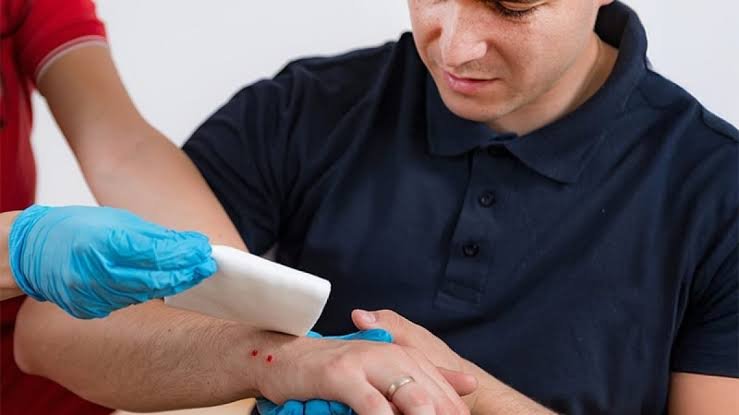
If the bite is on an arm, hand, leg, or foot, remove rings, bracelets, watches, anklets, or other restrictive items as soon as it can be done safely.
This is a precaution because swelling may make jewelry and other tight objects difficult to remove later.
Do not attempt to cut deeply into swollen tissue or perform other invasive procedures.
Do Not Cut the Bite
One of the most dangerous traditional responses to snakebite is cutting the wound.
Do not cut, puncture, or make incisions around the bite in an attempt to remove venom.
WHO specifically warns against cutting the bite because it can cause unnecessary bleeding and other complications.
Cutting the skin does not provide a reliable way to remove venom that has already entered the body’s tissues.
Do Not Suck Out the Venom
Do not attempt to suck venom out of the wound with your mouth or with a suction device.
This traditional practice does not provide a reliable way to remove venom and can cause additional injury or contamination.
WHO specifically lists sucking venom from the bite among first-aid practices that should not be used.
The safest approach is to leave the wound alone and focus on immobilization and rapid transportation to medical care.
Do Not Apply a Tight Tourniquet
A tight tourniquet around the bitten limb can be dangerous.
It can restrict blood flow and potentially cause tissue damage. WHO advises against using tight arterial tourniquets for snakebite.
Do not improvise a tight belt, rope, wire, or piece of clothing around the limb.
Snakebite first aid can vary depending on the snake species and local medical protocols, so follow instructions from emergency professionals if they provide them.
Don’t Apply Ice or Chemicals
Avoid putting ice, chemicals, herbs, or other substances directly on the bite.
These approaches have not been shown to safely remove venom and may cause additional tissue injury.
WHO identifies the application of chemicals, herbs, and ice packs among traditional methods that can be useless or harmful.
Keep the treatment simple while arranging professional medical care.
Do Not Give Alcohol
Do not give the person alcohol as a supposed remedy.
Alcohol does not neutralize snake venom and may make it more difficult to assess the person’s condition.
Instead, focus on keeping the person calm and getting them to medical care.
If medical professionals give instructions about drinking, medication, or other care, follow their advice.
Watch for Serious Symptoms
While waiting for medical help, monitor the person closely.
Depending on the venom and snake species, serious symptoms can include increasing swelling, severe pain, weakness, drooping eyelids, difficulty swallowing, difficulty speaking, breathing problems, abnormal bleeding, vomiting, dizziness, or loss of consciousness.
Some snake venoms can interfere with the nervous system and cause muscle weakness or respiratory paralysis. Others can cause significant tissue damage or problems with blood clotting.
The absence of immediate severe symptoms does not necessarily mean the person is safe.
That is another reason not to delay medical evaluation.
If the Person Becomes Unconscious
If the person becomes unconscious, check their breathing and follow emergency-dispatch instructions.
If they are breathing but unconscious, an appropriate recovery position may help keep the airway clear while waiting for professional assistance, provided this can be done without unnecessary movement of the injured limb.
If the person is not breathing normally, emergency responders should provide instructions for resuscitation. Follow those instructions as closely as possible.
The priority remains maintaining breathing and circulation while getting professional help.
What About Pressure Bandaging?
Pressure immobilization is sometimes recommended for particular types of snakebite, especially bites involving neurotoxic snakes such as certain elapids. However, it is not appropriate for every snakebite.
WHO guidance notes that pressure immobilization depends on the type of snake and the local situation. It should not be confused with applying a tight tourniquet.
Because snake species and recommended protocols differ by region, follow local emergency guidance rather than automatically applying a pressure bandage to every snakebite.
This distinction is especially important because some venomous snakes primarily cause local tissue injury, for which certain pressure techniques may be inappropriate.
Don’t Try to Identify the Snake Yourself
Snake identification can be useful to medical professionals, but trying to approach the snake can put you at risk.
If someone safely obtained a photograph from a distance, keep it available for medical staff.
Do not rely on a photograph alone to decide whether treatment is necessary. Some people cannot accurately identify venomous species, and even a nonvenomous-looking snake should not be handled after a bite.
What Information Should You Tell Doctors?
When you reach medical care, tell healthcare professionals as much as you can remember.
Useful information may include when the bite occurred, where on the body the person was bitten, what the snake looked like, where the incident happened, and what symptoms developed afterward.
If someone took a safe photograph of the snake, show it to the medical team.
Also tell doctors about existing medical conditions, allergies, medications, and any first-aid measures already performed.
This information can help the medical team assess the situation.
Antivenom Is the Specific Treatment
If venom has been injected and clinically significant envenoming develops, antivenom may be required.
WHO describes snake antivenoms as the only specific treatment for snakebite envenoming and emphasizes their importance in preventing or reversing many effects of venom.
Antivenom is not something to administer at home. It must be selected and administered by appropriately trained medical professionals because the correct antivenom depends on the snake and local circumstances.
This is why getting to a medical facility quickly is so important.
What If You Are Not Sure the Snake Was Venomous?
Do not assume that a bite is harmless simply because you are unsure what type of snake caused it.
It can be difficult for an untrained person to identify snake species accurately, and symptoms may not appear immediately.
The safest approach is to seek urgent medical evaluation.
It is better to have a healthcare professional determine that antivenom or other treatment is unnecessary than to delay care because the snake was assumed to be harmless.
Common Snakebite Myths to Avoid
Many traditional snakebite practices continue to circulate online.
Cutting the wound, sucking out venom, applying a tight tourniquet, using a snake stone, applying chemicals or herbs, and using electric shocks are examples of methods WHO identifies as ineffective or potentially harmful.
The most important lesson is simple: do not experiment with home remedies during a potentially life-threatening emergency.
The priority is immobilization, monitoring, and rapid access to appropriate medical care.
Final Thoughts
A snake bite should always be taken seriously, particularly when the species is unknown.
The most important steps are to move away from the snake, seek emergency medical help, keep the person calm and still, immobilize the bitten limb, and avoid dangerous traditional treatments.
Do not cut the wound, suck out venom, apply a tight tourniquet, or put ice, chemicals, or herbs on the bite. WHO specifically warns that several of these traditional methods can cause harm.
If possible, a photograph of the snake taken safely from a distance may help medical professionals, but never approach or handle the snake to obtain one.
Most importantly, don’t wait for severe symptoms before seeking care. Snakebite envenoming can become serious, and antivenom is the specific treatment when venomous envenoming occurs.
If an actual snake bite has just happened, treat it as an emergency and seek professional medical care immediately rather than relying on this article alone.