


The phrase “cockroach milk” may sound strange, especially to anyone who associates cockroaches with kitchens, pests, and unwanted household visitors. Yet scientists have been studying a nutrient-rich substance produced by one unusual cockroach species, raising an intriguing question: could it eventually become part of the food supply?
The short answer is possibly, but we are still very far from calling cockroach milk a practical superfood.
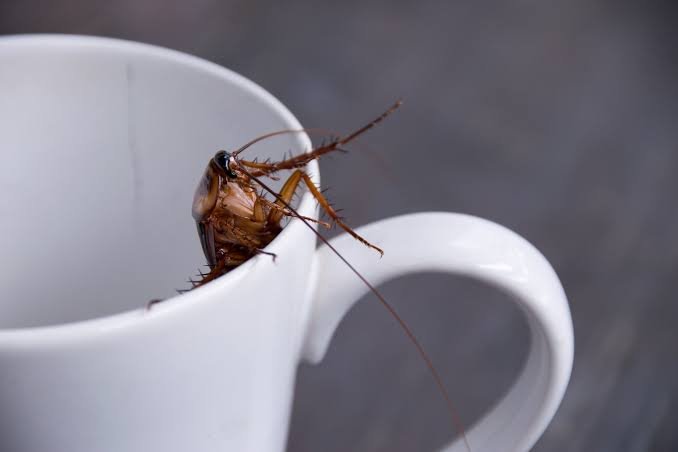
The substance that created the scientific interest comes from the Pacific beetle cockroach, Diploptera punctata. Unlike most cockroach species, this insect gives birth to live young and produces a milk-like secretion to nourish its developing offspring. Researchers have found that the secretion contains protein, fats, sugars, and protein-rich crystals that have attracted attention because of their unusual nutritional properties.
However, there is an important distinction between finding an interesting nutrient source in a laboratory and proving that it is safe, affordable, sustainable, and useful as a food for humans.
What Exactly Is Cockroach Milk?
Cockroach milk is not milk in the same sense as cow’s milk.
Female Diploptera punctata produce a milk-like secretion inside their reproductive system to feed their developing young. The secretion contains nutrients needed for the offspring to grow.
Researchers have found that the secretion contains protein crystals that are exceptionally energy-dense. A 2016 study published in the journal IUCrJ examined these crystals and found that they contain proteins, fats, and sugars and appear to provide nutrients to developing cockroach embryos.
This unusual biology is what has made the substance scientifically interesting.
It is not, however, a product that is currently sitting next to cow’s milk in ordinary grocery stores.
Why Did Scientists Become Interested in It?
One of the main reasons cockroach milk attracted attention is its apparent energy density.
The protein crystals found in the secretion are highly concentrated sources of nutrients. Scientists have investigated their structure and how they may supply energy to developing cockroach embryos.
This raises interesting questions about whether similar nutrient-rich materials could eventually have applications in food science or biotechnology.
But “interesting nutritional composition” does not automatically mean “better food.”
A food needs to be evaluated for much more than its protein or calorie content. Researchers also have to consider safety, digestibility, allergies, production methods, environmental impact, cost, taste, and whether it can be produced consistently on a large scale.
Is Cockroach Milk More Nutritious Than Cow’s Milk?
It is too early to make that claim.
The phrase “cockroach milk is four times more nutritious than cow’s milk” has appeared widely online, but such comparisons can be misleading.
The research that attracted attention focused on the protein crystals produced by Diploptera punctata, rather than establishing that cockroach secretion is a superior everyday beverage for humans.
Cow’s milk has been extensively studied as a human food. It provides protein, calcium, phosphorus, vitamin B12, and other nutrients, and its nutritional composition is well understood.
Cockroach milk, by comparison, has been studied primarily at the laboratory level.
Therefore, saying that it is “better” than cow’s milk goes beyond the evidence currently available.
Could Humans Digest It?
This is another important unanswered question.
Researchers have demonstrated interesting properties of the protein crystals, but that does not mean that humans should consume raw cockroach secretions.
The human digestive system would have to process the proteins, fats, and other compounds, and researchers would need to establish their nutritional value and safety through appropriate studies.
Food safety is especially important when considering a substance derived from insects.
Before any novel food could realistically become part of a mainstream diet, researchers would need reliable evidence about possible allergens, contaminants, microbial risks, processing requirements, and long-term consumption.
Why Not Simply Collect It From Cockroaches?
One obvious problem is production.
A cow produces large quantities of milk that can be collected efficiently. Producing a tiny amount of secretion from cockroaches is an entirely different challenge.
The Pacific beetle cockroach is a small insect, and the amount of secretion produced by individual insects is extremely limited.
Harvesting enough material from individual cockroaches to supply large numbers of people would therefore be impractical using conventional methods.
This is one of the biggest barriers between an intriguing laboratory discovery and a commercially viable food.
Could Biotechnology Solve the Problem?
Possibly.
Instead of trying to collect the secretion directly from large numbers of insects, scientists could theoretically investigate ways of producing useful proteins or components through biotechnology.
This is similar to how researchers approach many other emerging food technologies. The goal is not necessarily to raise enormous numbers of insects and collect a product manually. Instead, scientists can investigate whether specific proteins or molecules can be produced more efficiently through controlled biological systems.
However, developing such technology would require extensive research, testing, regulatory review, and investment.
It is therefore more accurate to describe cockroach milk as a potential research opportunity than as an imminent replacement for conventional milk.
What Makes the Protein Crystals So Interesting?
The protein crystals found in Diploptera punctata milk are unusual because they function as nutrient storage structures for developing embryos.
The 2016 research found that the crystals contain proteins as well as other nutrients and suggested that they may represent a highly efficient nutritional package for the developing young.
Their structure is particularly interesting to scientists because the crystals appear to release nutrients as they are digested by the developing embryo.
This could potentially teach researchers more about biological nutrient storage and protein structures.
But again, a fascinating biological mechanism does not automatically translate into a new human food.
Could Cockroach Milk Help Address Future Food Needs?
This is where the idea becomes more interesting.
As the global population grows and pressure increases on food systems, scientists are exploring alternative sources of protein and nutrients.
Researchers are studying insects, algae, fermentation-based foods, cultivated meat, and other unconventional food technologies.
Cockroach-derived proteins are one small part of this broader scientific conversation.
The potential attraction is not necessarily that everyone will someday drink cockroach milk. Instead, scientists may discover useful proteins or production techniques that could inspire new food technologies.
Would It Be Sustainable?
It is too early to say.
Insect farming can have environmental advantages in some circumstances because insects can require relatively little land and water compared with certain conventional livestock systems. However, the environmental impact depends heavily on the species, feed, energy requirements, farming conditions, and processing methods.
Cockroach milk presents a different problem because the secretion itself is produced in extremely small quantities.
If large-scale production required maintaining enormous numbers of insects, the environmental and economic advantages would need to be carefully evaluated.
A biotechnology-based production system could potentially change that equation, but this remains an area for future research rather than an established solution.
What About Taste?
There is another very practical question that scientific papers cannot answer easily: Would people actually want to eat it?
Nutrition is only one factor that determines whether a food becomes popular.
Taste, smell, texture, appearance, cultural acceptance, price, convenience, and familiarity all influence what people choose to eat.
Even if researchers eventually develop a safe and nutritious cockroach-derived ingredient, convincing consumers to try it could be a much bigger challenge.
The term “cockroach milk” alone is likely to create a strong psychological reaction for many people.
Is Cockroach Milk Currently Available as a Superfood?
No.
Despite attention on social media and news websites, cockroach milk is not an established mainstream superfood.
There is no evidence that healthy adults should seek it out for improved nutrition.
Most of the excitement comes from research into the unusual biology of Diploptera punctata and its nutrient-rich secretion.
Calling it a “future superfood” is therefore speculation rather than a scientific conclusion.
Could It Have Medical or Nutritional Applications?
Researchers may eventually investigate whether particular proteins or compounds associated with the secretion could have useful nutritional or biotechnology applications.
But such possibilities require careful testing.
A laboratory discovery can take years or decades to move from basic research to a practical product. Many promising biological discoveries never become commercially useful foods.
For that reason, it is better to view cockroach milk as an example of how scientists are exploring unusual biological resources rather than as a proven nutritional breakthrough.
Why This Research Still Matters
Even if nobody ever drinks cockroach milk, studying it can still be valuable.
Nature contains countless unusual biological systems that have evolved highly efficient ways of storing and delivering nutrients. Understanding these systems can sometimes inspire new technologies.
The protein crystals produced by Diploptera punctata offer researchers an unusual example of how proteins and nutrients can be packaged for developing offspring.
That information may contribute to broader scientific knowledge about proteins, crystallization, digestion, nutrition, or biotechnology.
Science does not always have to produce a product immediately to be useful.
Final Thoughts
Cockroach milk is one of those scientific discoveries that sounds almost unbelievable at first. A particular cockroach species produces a milk-like secretion containing nutrient-rich protein crystals that help nourish its developing young.
Researchers have found the biology fascinating enough to study in detail, particularly because of the unusual structure and nutritional density of the protein crystals.
But it is important not to confuse scientific curiosity with proven health benefits.
There is currently no good reason for consumers to replace cow’s milk with cockroach milk, and there is not enough evidence to call it a superior food or a proven “superfood.”
The bigger story may actually be about future food technology. Scientists are increasingly looking at unusual organisms and biological processes for ways to produce nutrients more efficiently and sustainably.
Cockroach milk may never become a common beverage. But the remarkable biology behind it demonstrates that nature can provide unexpected ideas for researchers searching for new approaches to nutrition.
For now, cockroach milk is best understood not as the next supermarket staple, but as a fascinating subject of scientific research with some intriguing possibilities for the future.